Computers in Education

What is the purpose of computers in education?

To cut the feedback time down.

That is all they can do, and all they should do.

Why? Feedback is vital for learning. Without feedback, you have nothing that most people would think of as "learning".

Proper use of computers in education requires some "out-of-the-box" thinking. Proper use of computers would largely eliminate the test structures we have now, but anybody who proposes that is promptly shot as a heretic. (Have you noticed this schizophrenic approach to education reform, where we all agree that schools really need reform, but consider the way schools are doing things now holy, such that any significant reform is immediately discarded?)
Linux vs. Windows: The Real Difference

Microsoft reacts to marketing pressure to make design decisions favoring running a few processes faster but then finds itself forced first to layer in backward compatibility and then to engage in a patch-and-kludge upgrade process until the code becomes so bloated, slow and unreliable that wholesale replacement is again called for.

Despite the obvious Linux slant, this is probably one of the most coherent discussions of the structural differences between the Linux kernel development process and the Windows kernel development process, resulting in the differences between the Linux kernel and the Windows kernel, that I've ever seen. Recommended.

Yes, I Am A Number...

We've been reduced to the status of consumers and nobody seems to object. Think of the imagery: a creature with a huge mouth and an enormous gut, no brain and no soul. Consumers get points for consuming junk, the more they consume, the more points they get. They can retrieve these if they can remember their PIN numbers because unlike the customers of another era who had names, consumers have numbers. When they've gorged enough, they can consume more, and they seem to believe that these points are bonuses....

And yet, there is no consumer rebellion. Men, women and children all press buttons and follow instructions like robots with nothing better to do. They're not customers demanding service, they're consumers attached to some enormous electronic teat that will feed them what it wants, when it wants.

Destimulating the Journalism Laser

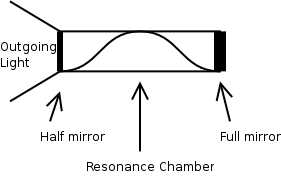
A LASER, which is technically an acronym that stands for Light Amplification by Stimulated Emission of Radiation, works in general as follows:

A resonance chamber is filled with some substance and "stimulated" in some manner so it wants to release photons. The photons a substance releases will be of certain frequencies corresponding to the substance's emission spectrum. The chamber is an integral multiple of of the wavelength that you desire.

Outlines, Part 6

In my previous post, I discussed the practical matter of how to hold the outline structure we've built so far together. Having created a strong base, it is now fruitful to consider how to extend the data structure to handle the wide variety of outline structures I want Iron Lute to be able to manipulate.

Node Types

One of the most interesting possibilities inherent in this structure is to formally recognize that there are a lot of potential different types of nodes that can be built.

HR3261 - Database and Collections of Information Misappropriation Act

Slashdot recently posted a panicky article about HR3261, the "Database and Collections of Information Misappropriation Act".

I read the proposed bill. Based on the Slashdot summary, especially the phrase "goes directly against the idea that nobody can own a fact", I was hoping to be able to perform a bit of judo on the legal system. If ownership of the database implied ownership of the facts within, then we could all form a corporation and give it our privacy-sensitive information (links to definition of this term) like our address and phone number, then sue people who use them against our will. We might have had some hoops to jump through (incorporating, meeting the creativity standard), but it probably could have been managed.

Why I don't believe in Government Conspiracies About Aliens

My wife recently got into Stargate: SG-1, a high quality science fiction television series that I was already a fan of.

The premise is that the United States Air Force is in possession of a "Stargate", a device that connect to other Stargates throughout the universe, analogously to a phone system, and send things there, including people. There are a wide variety of aliens in the universe at various technology levels from "just discovered fire" to "godlike", many of which did visit Earth in the past. The storyline proceeds from there.

Telephone Rings

We have a new telephone system coming in here at work. It is uniformly an improvement over the old system, at least on a technical level. It did, however, require purchasing new phones to go with the new system.

I want to shoot whoever designed them.

Or at least make him sit in this room with us for a week or two.

He (and I highly doubt it's a "she") seems to be under the impression that the job of a phone ring is to force you to pay attention to the phone. The phone has not done its job until you pick it up. So it is loud and shrill, and based on the how successful the sound is at being both of those things, I'm quite confident in declaring these characteristics were definately concious design decisions.

On Holding Together This Structure

In my previous posts, I've answered the question "What Is An Outline?" from the point of view of Iron Lute. The resulting data structures are somewhat complicated. These data structures are at the heart of Iron Lute; if they fail, the entire program can come crashing down. Moreover, if nobody is capable of correctly using the data structures, they are still useless. It's worth discussing

Theory to Practice: How Do We Hold This Together?

Storing My Outlines

One significant advantage a more conventional outline has over the outline structure I've built up here is that it is much easier to store the traditional outline in a file. Using XML, traditional outlines are almost trivial to store:

<node text="A">
  <node text="B" />
  <node text="C" attribute="D" />
  </node>

Even if you don't read XML, you can quickly learn to read this format. About the only difference between what I just wrote and the official OPML specification is that OPML adds a <head> section that includes some metadata about the outline, and uses "outline" instead of "node".